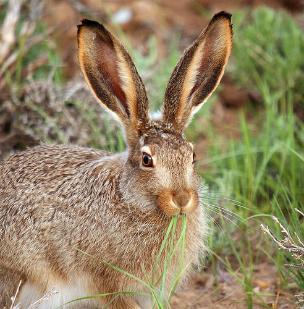
 | Deserts cover about one fifth of the Earth's land surgace. You will most likely associate deserts with cacti, camels, and sand dunes, but there is much more to it than just that. Deserts have a varied species of animals that have adapted to the harsh climate of the desert. Animals of the desert include the Jackrabbit, tortoise, Kangaroo Rat, Thorny Devil, Sidewinder, Dingo, Fennec Fox, a variety of reptiles such as snakes and lizards, amphibians such as frogs and toads and the Cactus Wren. In the desert, the plants look unlike anything you see anywhere else. These plants have adapted so that their roots are shallow enough to reach the water of a storm, or deep enough to access the ground water. Most Hot and Dry Deserts are near the Tropic of Cancer or the Tropic of Capricorn. |
There is a shortage of precipitation in the desert receiving less than 25 centimeters a year, receiving the least rain in the spring & summer. Although August is one of the months that receives the most rain with up to 1.3 centimeters of rain. The months of December to March is the time period when the desert receives the most precipitation. In May and June it does not receive any precipitation at all.
Average Temperature in Summer- 100°F
Animals that live in the desert must adapt to their environment in order to survive. The cactus can store gallons of water in their stems and trunks. The Jackrabbit's abnormally large ears allow it to relieve heat. Kangaroo rats take water from the food they eat, thus, they never have to drink. Most of the flowering plants flower, bloom, and produce seeds in a very short time after a large amount of rain. Spadefoot toads spend 9 months out of the year underground.
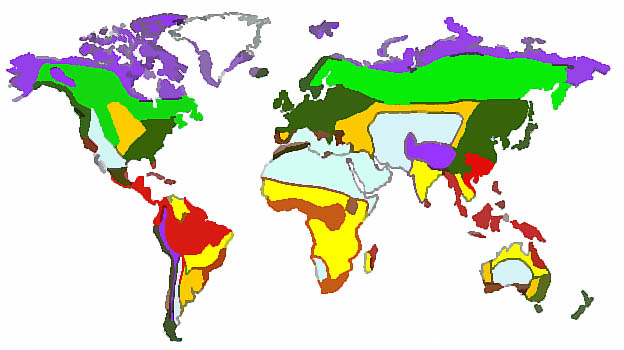 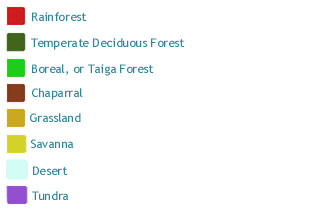 There are also many national parks and monuments in the deserts located across the world. Located in Utah is the Arches National Park (shown below). Pipe Spring National Monument in Mocassin, AZ, preserves a historic fort and other structures built by mormon pioneers near a year-round spring in the southern Great Basin Desert. The Monument was established by President Calvin Coolidge on May 31, 1923, to memorialize the exploration and settlement of the southwest. 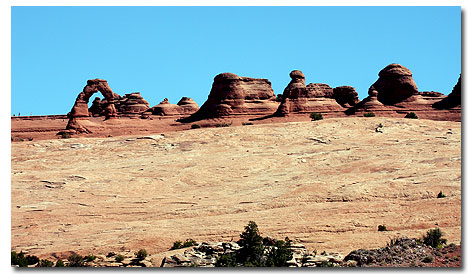 | 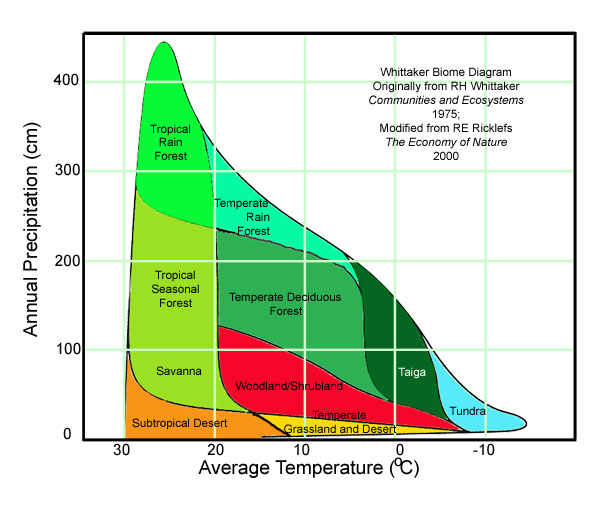 Climatogram:A Climatogram is a graph that averages weather in a biome over a certain period of time. They show variation in two factors, Temperature and Precipitation. Abiotic, meaning not alive, are nonliving factors that affect living organisms. Biotic, meaing of or related to life, are living factors. Abiotic factors of the desert include sand, sunlight, water, air and temperature. Biotic factors of the desert include scorpions, coyotes, snakes, spiders, lizards, and cacti. |
Arches National Park, Utah 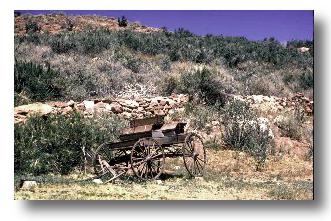 Pipe Spring National Monument, Arizona |
